Interlocking PVC wall and ceiling panels create a smooth, moisture-resistant finish for spaces that are difficult to maintain with paint, drywall, or tile. Their tongue-and-groove edges can speed installation, while systems with hidden fasteners and compatible trims create a clean finish at corners, openings, and transitions. This PVC wall panel buyer’s guide explains where these systems work best, which specifications matter, and how installation and maintenance affect long-term value:
What Are Interlocking PVC Wall And Ceiling Panels?
Interlocking PVC wall and ceiling panels are rigid interior cladding panels made from polyvinyl chloride. Each panel connects to the next with a tongue-and-groove edge, which creates a continuous finished surface with fewer exposed joints than many conventional wall finishes. Depending on the system, a fastening flange and matching trim pieces keep the installation tidy. They also leave room for the panels to expand and contract as conditions change.
These panels are often used where painted or porous surfaces are hard to maintain. Common spaces include workshops, garages, agricultural buildings, washrooms, food-related areas, and commercial back rooms. The panel itself is only one part of the assembly, though. The substrate, trim, sealant, fastening pattern, and ceiling rating all need to suit the room. The best results come from considering the full assembly from the start.
Benefits Of Interlocking PVC Panels For Commercial And Industrial Spaces
For many commercial and industrial interiors, interlocking PVC panels offer a cleanable, non-porous finish that doesn’t need taping, mudding, or repainting. They’re especially useful where humidity, splashing, or regular washdowns would wear down drywall or leave tile grout looking tired. Smooth white panels can also help make storage areas, utility rooms, and workspaces feel brighter.
The useful question is how those benefits fit the room’s operating conditions. Exposure and maintenance expectations should guide the recommendation.
The practical benefits usually include:
- Moisture resistance that helps panels avoid the swelling, peeling, and soft spots associated with painted drywall
- A smooth surface that’s easier to wash when the product and cleaner are compatible
- Lightweight panels that are easier to handle during installation
- A finished system of trims and joints that can look more consistent than pieced-together wall repairs
- Lower routine upkeep when the right panel is matched to the right environment
Not sure which PVC panel fits your space? Talk with IroSteel about your project.
PVC isn’t automatically the best answer beside high-heat equipment or in every regulated space, so product documents still matter. Review options for DelPro PVC panels in Winnipeg with us, and we can help you confirm the specifications that apply to your project.
The benefit is less about calling every panel “maintenance-free” and more about choosing a surface that fits the work the room does. A well-specified liner panel can simplify cleanup and repairs, but it won’t solve poor ventilation, an unstable wall, or an unsuitable cleaning routine. That practical distinction helps buyers compare materials honestly and plan for the building’s real operating conditions.
How To Choose The Right Interlocking PVC Panels
The right choice starts with the conditions in the room, not the panel’s price or colour. We start with the job the room needs to do. Consider how often you’ll clean the area and whether it experiences steam or condensation. Then look at what could strike the surface and whether the panels will cover walls, ceilings, or both. Food handling, washdown routines, cool temperatures, and chemical cleaners can all change what you should specify. Also confirm insulation compatibility, required fire ratings, impact needs, and whether the product is approved for walls, ceilings, or both.
Match The Panel Specification To The Environment
In a garage or workshop, impact resistance, brightness, and easy cleaning may be priorities. In a commercial kitchen, agricultural building, or wash bay, sealed joints, cleaning compatibility, and product documentation carry more weight. Bathroom PVC wall panels need details suited to splashes and humidity, while garage ceiling PVC panels require verified support spacing and approval for overhead use. Separate wall requirements from ceiling requirements. When comparing interlocking PVC ceiling panels, confirm the product’s span, support spacing, and fastening requirements rather than assuming a wall panel is suitable. IroSteel can help you compare those details before you order materials.
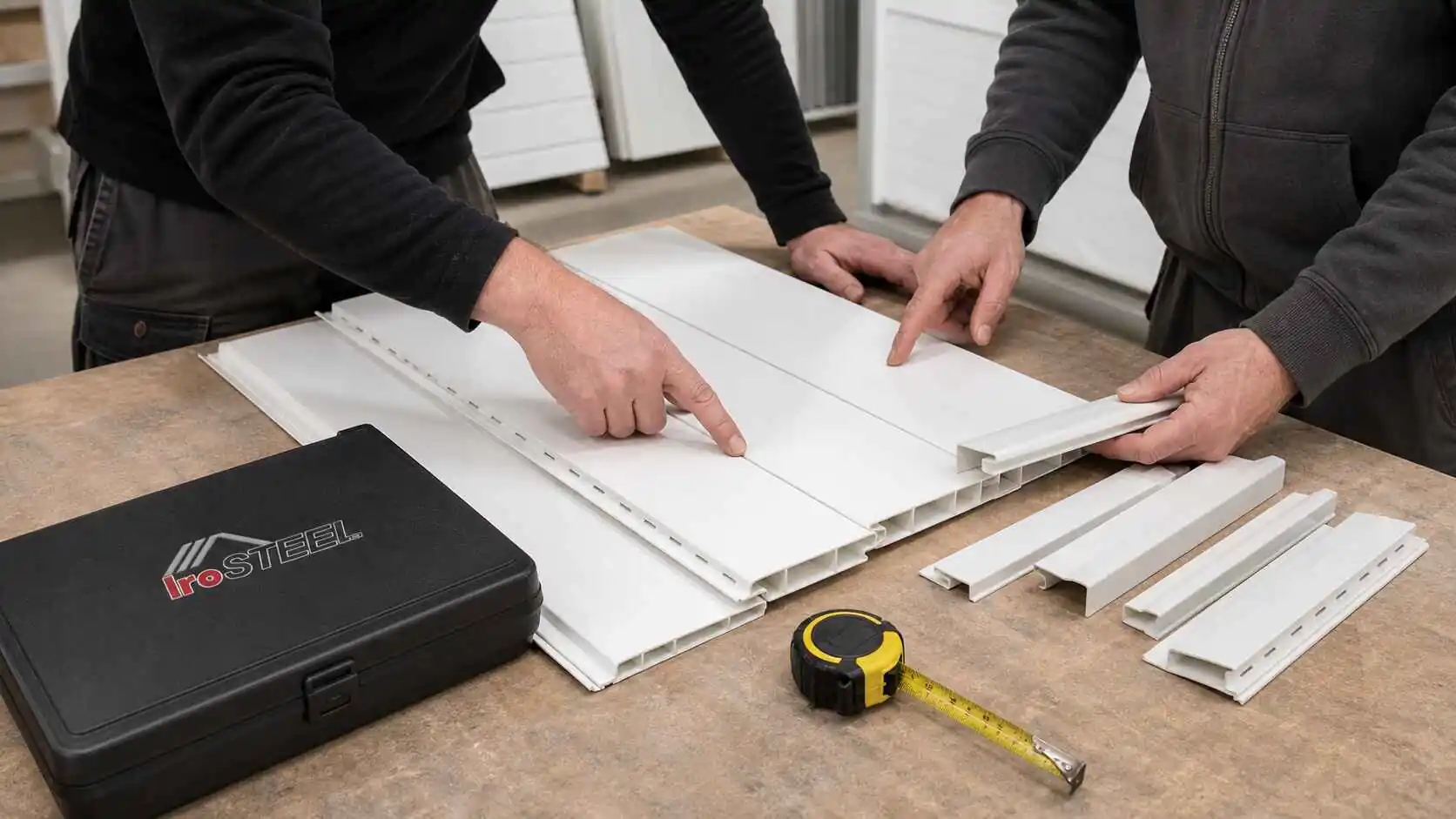
Start with the whole assembly. A sound, reasonably flat substrate makes alignment easier, while trims at corners, bases, openings, and ceilings protect the finished edges. Review this PVC panel installation reference. It shows why expansion space and approved accessories matter.
Compare Panel Profiles, Sizes, & Finishes
Panel width, rigidity, surface finish, and trim availability all affect the finished result. Wider panels can cover a room quickly. A rigid profile may be a better fit where carts, equipment, or daily activity create impact risk. Smooth white liner panels are common in hygiene-sensitive and utility areas, while decorative finishes are often better suited to lighter-duty interiors. We can help you weigh those differences against the way you’ll use the room, and our guidance can keep the comparison centred on performance.
Compare the complete package, including inside and outside corners, starter and finishing trims, joining profiles, base transitions, and sealant requirements. Kodiak PVC Wall & Ceiling Liner Panels shows the type of product information worth comparing. Two other guides, Why People Love PVC Wall Panels for Homes and the Benefits to Using Interlocking PVC Wall Panels, add examples of where these systems can fit. Together, they help clarify how liner panels differ from decorative options. You’ll get a more reliable decision when you evaluate the panel profile and accessories together.
Installation, Maintenance, And Long-Term Value
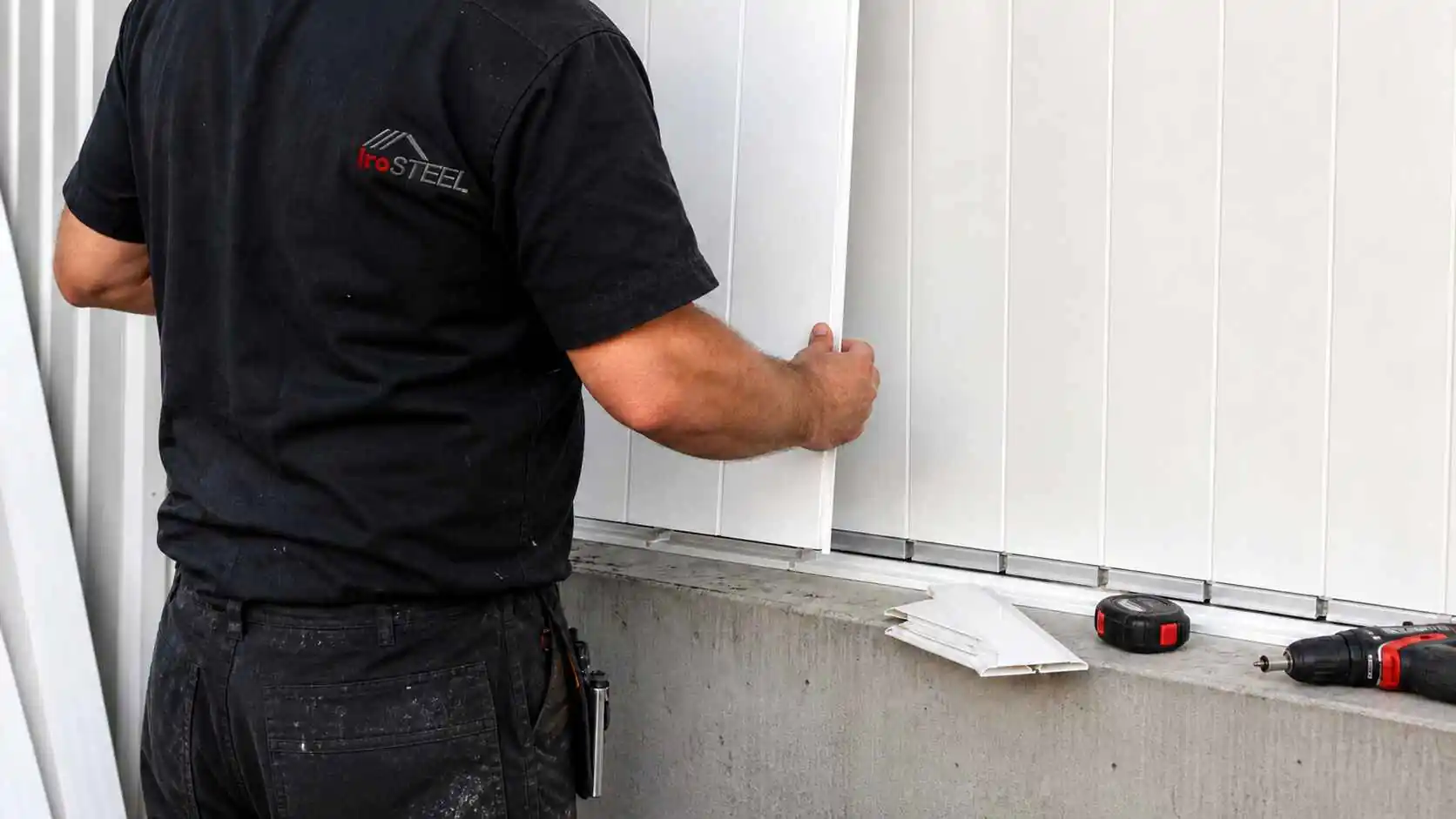
PVC ceiling panel installation and wall installation both depend on careful preparation. Panels generally need a clean, stable, and reasonably flat base, plus the manufacturer’s recommended fasteners, trims, and expansion clearances. Installers should begin square and level because a crooked first panel can affect the whole run. In wet or hygiene-sensitive areas, sealing details at joints, penetrations, floors, and ceilings are just as important as the panel face. Careful planning at this stage helps protect the finish over time.
Before specifying a system, review IroSteel’s overview of interlocking PVC panels for walls and ceilings. It shows where these products can make sense. We’d still encourage you to check the chosen product’s current installation instructions, since accessory details and approved uses can vary between panel lines.
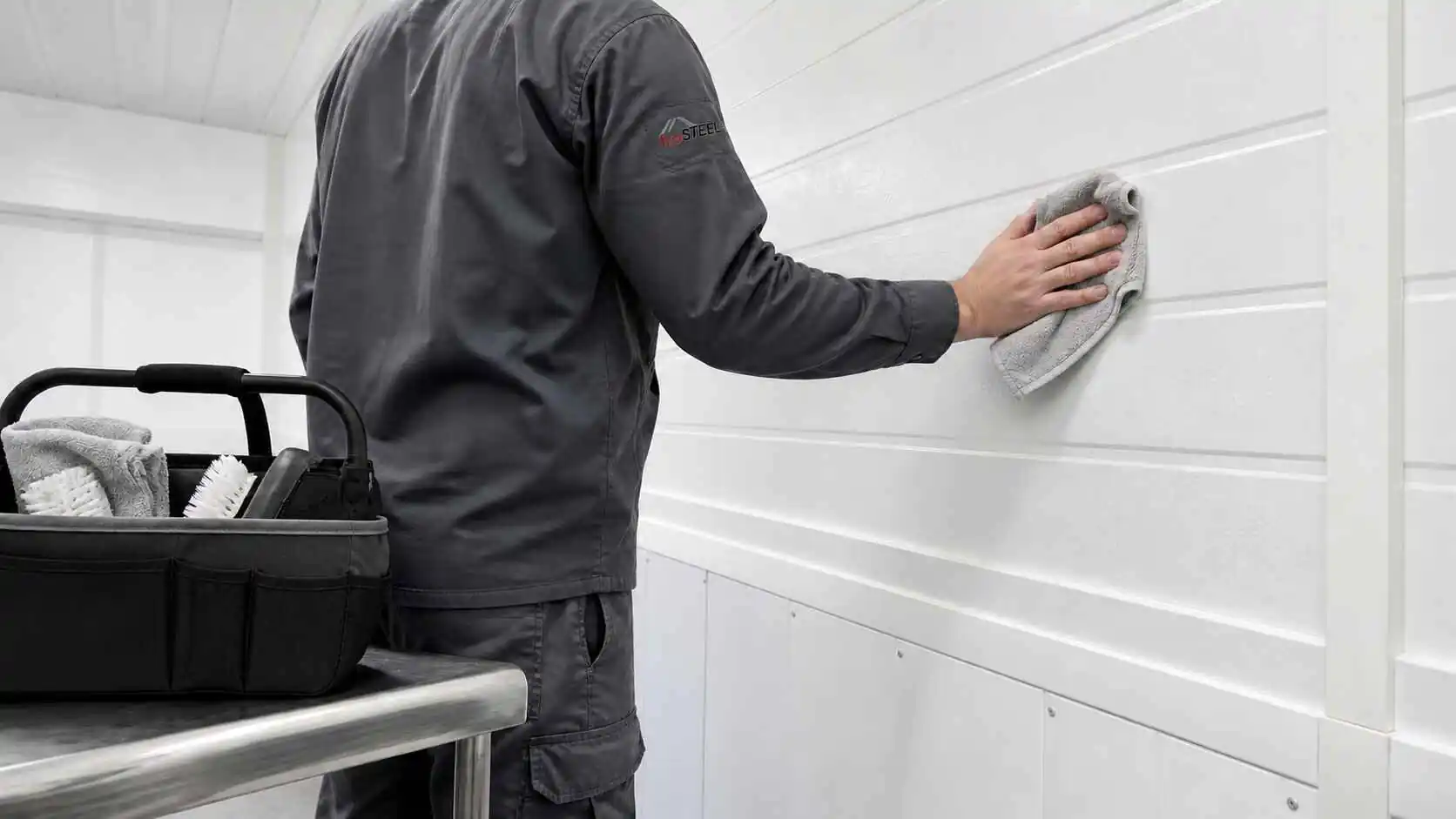
Maintenance is usually straightforward. A soft cloth or sponge with an approved mild cleaner is often enough for regular care. Abrasive pads and unverified chemicals can damage the surface. Long-term value comes from fewer paint cycles, less moisture-related repair, and the ability to replace a damaged section when the system allows it. When comparing PVC panels vs. tile or painted drywall, PVC can offer a lower-maintenance finish. Compare the cost of waterproof wall panels as a full installed system rather than looking only at the panel price.
Ready to plan your wall or ceiling panel system? Contact IroSteel to review the details.
Frequently Asked Questions About Interlocking PVC Wall And Ceiling Panels
Are interlocking PVC panels waterproof?
PVC panels resist moisture and won’t absorb water like drywall, but a waterproof finished surface still depends on correctly installed trims, joints, and sealant. For splash or washdown areas, confirm the full system is intended for that exposure.
Can PVC wall and ceiling panels be installed over existing surfaces?
Often, yes. Panels can be installed over a sound, dry, and reasonably flat surface such as drywall, plywood, or existing wall finishes, provided the manufacturer permits it. Uneven masonry commonly needs furring, or another approved fastening base.
Are PVC panels suitable for food-safe or hygienic areas?
Many liner-style panels are used in hygienic areas because their smooth surfaces are easier to clean. You should still verify the exact product’s sanitation, fire, cleaning, and installation documentation for the facility and its operating requirements.
How durable are interlocking PVC panels compared with traditional wall finishes?
Quality liner panels can hold up well against moisture and routine cleaning, and a rigid profile can offer useful impact resistance. Their durability depends on the panel grade, support, installation, and the conditions the room faces every day.
Do PVC ceiling panels require special cleaning or maintenance?
They usually need regular, gentle cleaning rather than special maintenance. Use compatible cleaners, avoid abrasive tools, and check joints and trims as part of normal building upkeep, especially where humidity or condensation is common.
Are interlocking PVC panels more cost-effective than traditional finishes?
They can be, particularly when reduced labour, repainting, downtime, and maintenance are part of the comparison. The best value depends on the panel, accessory package, installation conditions, and expected service life, not the initial material price alone.
Need Help Comparing PVC Panel Options?
If you’re weighing interlocking PVC wall panels for a garage, commercial interior, agricultural building, or hygiene-focused space, IroSteel Ltd. can help you sort through profiles, trims, specifications, and ceiling suitability. Based in Winkler, Manitoba, our team takes a practical approach to durable building materials. We can help you find the information that makes your next step clearer. We’ll walk you through the options without pushing you toward a one-size-fits-all answer.